Pain Medicine Not Working Anymore? When to Ask About a Pain Pump
Living with chronic pain is difficult enough. But when pain medicine that once helped starts working less, the frustration can feel overwhelming. You may find yourself needing more frequent doses, getting less relief, dealing with side effects, or feeling like pain is still controlling your daily life.
For some patients, this is the point when they begin asking about alternatives to pain medication. One option that may be considered for carefully selected patients is implantable pain pump therapy, also called an intrathecal pain pump.
A pain pump is not the first step for most chronic pain conditions. It is usually discussed when pain is severe, long-lasting, and not controlled well enough with other treatments. It may be considered for certain patients with chronic pain, cancer pain, post-surgical pain, spine-related pain, or other complex pain conditions.
At Vertex Pain Physicians, patients in San Antonio receive personalized evaluations to understand the cause of pain and explore chronic pain management options. If you are searching for a pain pump San Antonio TX, an intrathecal pump doctor San Antonio patients trust, or a pain management specialist San Antonio, the first step is a careful consultation.
Why Pain Medicine May Stop Working Well
Pain medicine may become less effective for several reasons. Sometimes the body changes. Sometimes the pain condition progresses. In other cases, the nervous system becomes more sensitive, or the medication no longer targets the main source of pain.
This does not always mean the patient did anything wrong. Chronic pain is complex, and long-term pain often needs a broader care plan than medication alone.
Common reasons pain medicine may not work anymore
Pain medicine may become less helpful because of:
- Medication tolerance
- Disease progression
- Worsening nerve irritation
- New injury or inflammation
- Advanced arthritis or spine changes
- Cancer-related pain changes
- Post-surgical pain complications
- Medication side effects limiting dose changes
- Pain spreading to new areas
- The pain source not being fully treated
When pain medicine is not working, the goal should not be to simply increase medication without understanding the cause. A pain management specialist can evaluate whether another treatment option may provide better relief with fewer systemic side effects.
What Is an Intrathecal Pain Pump?
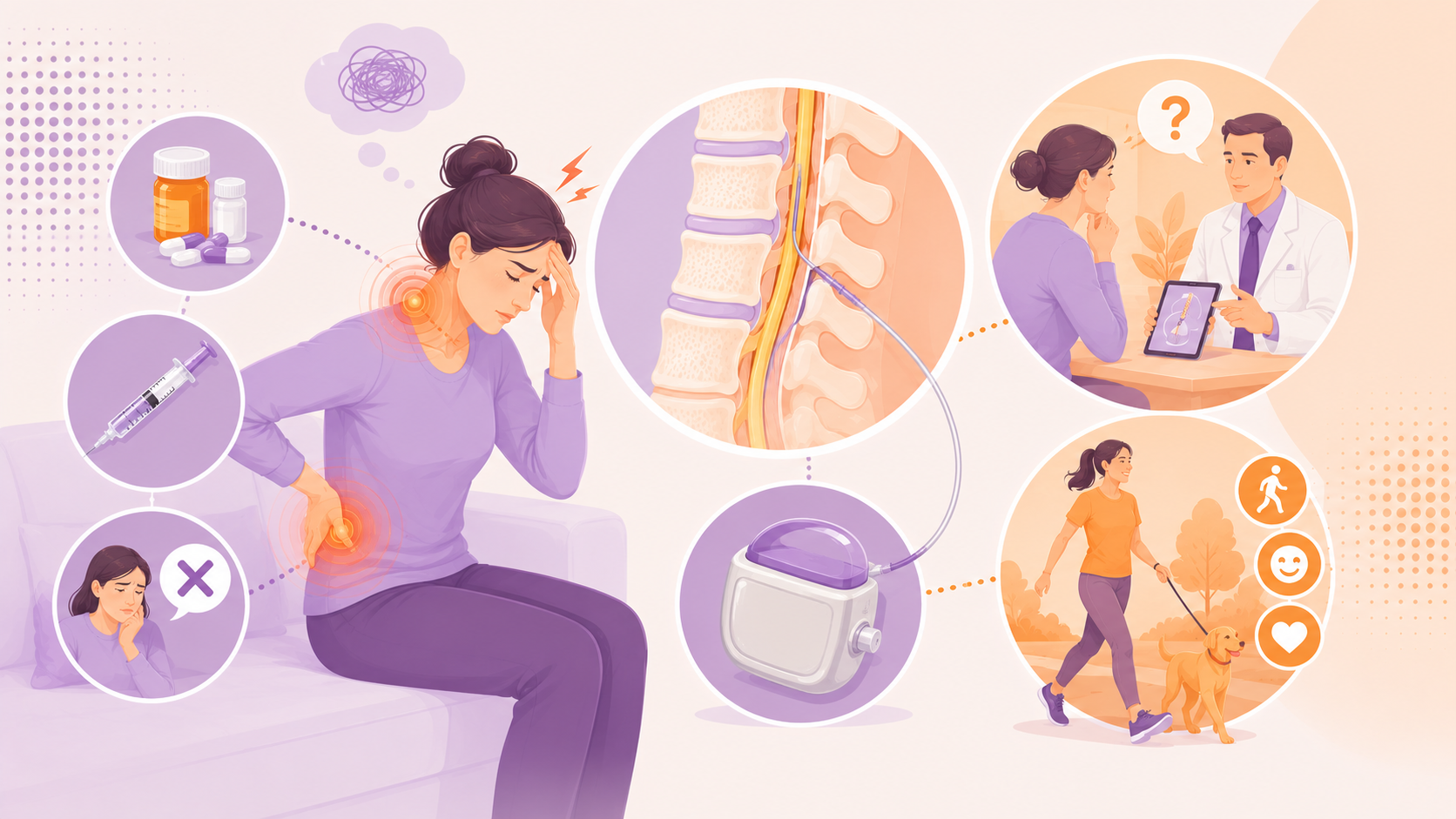
An intrathecal pain pump is a small medical device that is implanted under the skin, usually in the abdomen. The pump delivers medication through a thin catheter into the intrathecal space, which is the area around the spinal cord where spinal fluid flows.
Because the medication is delivered closer to the spinal cord, much smaller doses may be used compared with oral medication. The goal is to help control severe pain while reducing the amount of medication circulating through the rest of the body.
Implantable pain pump therapy may be considered for selected patients with difficult-to-manage chronic pain or cancer pain when other treatments are not providing enough relief.
A pain pump includes:
- A small implanted pump
- A catheter that delivers medication near the spinal cord
- A refillable medication reservoir
- Programmable settings controlled by the medical team
- Follow-up visits for monitoring and refills
A pain pump is a long-term treatment option that requires careful patient selection, trialing, implantation, refill visits, and ongoing management.
How Does Implantable Pain Pump Therapy Work?
Implantable pain pump therapy works by delivering medication directly to the spinal fluid area. This allows medication to act closer to pain-signaling pathways in the spine.
The pump is programmed by the provider to release a controlled amount of medication. The dose can be adjusted during follow-up visits based on pain relief, side effects, function, and patient goals.
The goal of pain pump therapy is to:
- Reduce severe chronic pain
- Improve comfort and daily function
- Lower reliance on oral pain medicine when appropriate
- Reduce medication-related side effects for some patients
- Support quality of life
- Provide more targeted pain control
- Help patients with complex pain conditions
Pain pump therapy does not cure the underlying pain condition. Instead, it is used as part of a broader chronic pain management plan for selected patients.
When Should You Ask About a Pain Pump?
You may want to ask about an intrathecal pain pump if pain medicine is not working anymore and your pain is still affecting your ability to function. This does not mean you will automatically be a candidate, but it may be worth discussing during a pain management evaluation.
A pain pump may be considered when pain is severe, persistent, and not controlled well enough with conservative care, medications, injections, or other procedures.
It may be time to ask about a pain pump if:
- Pain remains severe despite medication
- Medication side effects are difficult to tolerate
- You need higher doses but still have poor relief
- Pain limits walking, sleeping, or daily activity
- Cancer pain is difficult to control
- Post-surgical pain remains intense
- Other procedures have not provided enough relief
- You are looking for alternatives to pain medication
- Your quality of life is declining because of pain
A chronic pain clinic San Antonio patients trust can help determine whether a pain pump is appropriate or whether another option should be tried first.
Who May Be a Candidate for a Pain Pump?
Not everyone with chronic pain is a candidate for implantable pain pump San Antonio treatment. The decision depends on the diagnosis, pain severity, previous treatments, medical history, psychological readiness, medication response, and overall health.
Before implantation, many patients undergo a trial to see whether intrathecal medication provides meaningful relief. This helps the care team determine whether the pump is likely to help.
Possible candidates may include patients with:
- Severe chronic pain that has not responded to other treatments
- Cancer-related pain
- Certain spine-related pain conditions
- Post-surgical back pain
- Neuropathic pain in selected cases
- Pain medication side effects
- Poor relief from oral medication
- Complex pain requiring advanced management
A pain management specialist San Antonio patients visit will review whether the benefits may outweigh the risks in your specific case.
What Conditions May Be Treated With a Pain Pump?
Pain pumps may be used for several complex pain conditions. They are often considered when pain is long-term, severe, and difficult to control with standard treatment.
At Vertex Pain Physicians, patients may be evaluated for pain pump therapy as part of a broader approach to chronic pain management options.
Conditions that may lead to pain pump evaluation include:
- Cancer pain
- Post-surgical back pain
- Severe spine-related pain
- Neuropathic pain
- Chronic back pain in selected patients
- Complex regional pain patterns
- Pain that has not improved with other treatments
The exact recommendation depends on the source of pain, previous treatments, and patient goals.
Pain Pump vs Oral Pain Medicine
Oral pain medicine travels through the digestive system and bloodstream before reaching pain pathways. This means it affects the whole body, which can lead to side effects such as sleepiness, constipation, nausea, confusion, dizziness, or medication tolerance.
An intrathecal pain pump delivers medication closer to the spinal cord. Because the medication is more targeted, smaller amounts may be used in some patients.
Key differences include:
Oral pain medication:
- Taken by mouth
- Travels through the whole body
- May require higher systemic doses
- Can cause whole-body side effects
- May become less effective over time
Intrathecal pain pump:
- Implanted under the skin
- Delivers medicine near the spinal cord
- Uses programmable dosing
- Requires refills and monitoring
- May help selected patients with severe pain
Pain pump therapy is not simply “stronger medication.” It is a different delivery method that may be appropriate for specific chronic pain situations.
What Happens Before Getting a Pain Pump?
Before getting a pain pump, patients go through a detailed evaluation. This helps confirm whether the treatment is safe, appropriate, and likely to help.
A trial may be performed before permanent implantation. During a trial, medication is delivered in a temporary way to see whether pain improves enough to justify moving forward.
Before treatment, your provider may review:
- Pain diagnosis
- Pain severity and location
- Previous treatments
- Medication history
- Imaging or medical records
- Overall health
- Infection risk
- Bleeding risk
- Mental health and coping factors
- Treatment goals
- Ability to attend refill visits
This evaluation is important because an implantable pain pump requires long-term follow-up.
What Happens During Pain Pump Implantation?
If the trial is successful and the patient is an appropriate candidate, the pump may be implanted during a procedure. The pump is usually placed under the skin of the abdomen. A catheter is positioned to deliver medication into the intrathecal space.
After implantation, the pump is programmed and adjusted over time. Patients return for follow-up visits so the provider can monitor pain relief, side effects, and medication levels.
After implantation, patients need:
- Regular pump refill appointments
- Dose monitoring
- Device checks
- Side effect review
- Pain and function tracking
- Follow-up care with the pain specialist
- Awareness of urgent symptoms or pump alarms if applicable
A pain pump requires commitment. Patients should understand the responsibilities before choosing this treatment.
Benefits of Pain Pump Therapy
For selected patients, pain pump therapy may offer meaningful benefits. It may help patients whose pain remains severe despite other chronic pain management options.
The goal is not just to reduce pain scores. The goal is to help patients regain comfort, sleep better, move more, and improve daily quality of life when possible.
Potential benefits may include:
- More targeted medication delivery
- Better pain control for selected patients
- Reduced reliance on oral pain medicine when appropriate
- Fewer systemic side effects for some patients
- Adjustable dosing
- Long-term pain management support
- Improved comfort and function
Benefits vary by patient. A successful trial does not guarantee perfect relief, but it may help identify patients who are likely to benefit.
Risks and Responsibilities of a Pain Pump
Like any implanted medical device, an intrathecal pain pump has risks. These may include infection, bleeding, catheter problems, pump malfunction, medication side effects, or the need for future procedures.
Patients must also attend scheduled refill visits. If a pump runs empty or medication delivery is interrupted, serious withdrawal or pain flare symptoms may occur depending on the medication used.
Patients should understand:
- The device requires ongoing care
- Refill appointments are necessary
- Doses must be managed carefully
- Side effects must be reported
- Device problems need prompt attention
- The pump may need replacement in the future
- Not every patient is a good candidate
A careful discussion with an intrathecal pump doctor San Antonio patients trust can help you understand whether this therapy fits your condition and lifestyle.
Alternatives to Pain Medication Before a Pain Pump
A pain pump is usually considered after other options have not worked well enough. Depending on your diagnosis, there may be several alternatives to pain medication that can be explored first.
At Vertex Pain Physicians, the care plan is personalized. Some patients may benefit from injections, nerve blocks, radiofrequency ablation, spinal cord stimulation, peripheral nerve stimulation, or minimally invasive procedures before pain pump therapy is considered.
Other chronic pain management options may include:
- Epidural steroid injections
- Medial branch nerve blocks
- Radiofrequency ablation
- Joint injections
- Sacroiliac joint injections
- Trigger point injections
- Spinal cord stimulation
- Peripheral nerve stimulation
- Minimally invasive lumbar decompression
- Physical therapy support
- Medication optimization
The right option depends on the pain source. A full evaluation helps determine whether the next step should be a pain pump or another treatment.
When to See a Pain Management Specialist in San Antonio
You should consider seeing a pain management specialist San Antonio patients trust if pain medicine is not working anymore or if side effects are interfering with your life.
You do not have to wait until pain becomes unbearable. Early evaluation can help identify better options and prevent the cycle of worsening pain and increasing medication dependence.
Schedule an evaluation if you have:
- Chronic pain that is not controlled
- Pain medicine that no longer helps
- Side effects from pain medication
- Pain that affects sleep or walking
- Cancer pain that is difficult to manage
- Post-surgical back pain
- Nerve pain or burning pain
- Pain that limits daily activity
- Interest in alternatives to pain medication
- Questions about implantable pain pump therapy
Seek urgent medical care if you have sudden weakness, loss of bladder or bowel control, fever, confusion, severe new pain, or symptoms that feel dangerous or rapidly worsening.
Why Choose Vertex Pain Physicians in San Antonio?
Vertex Pain Physicians provides pain management services in San Antonio for patients dealing with acute and chronic pain. The specialists focus on identifying the cause of pain and building customized treatment plans.
For patients with severe chronic pain, care may include evaluating whether intrathecal pain pump therapy is appropriate. The team may also review other chronic pain management options such as injections, nerve blocks, radiofrequency ablation, spinal cord stimulation, peripheral nerve stimulation, and targeted drug delivery.
Patients choose Vertex Pain Physicians for:
- Personalized chronic pain evaluations
- Advanced pain management treatment options
- Implantable pain pump San Antonio evaluations
- Care for cancer pain, back pain, nerve pain, and post-surgical pain
- Minimally invasive procedures when appropriate
- Patient-centered pain management planning
- San Antonio chronic pain care focused on function and quality of life
If you are searching for a chronic pain clinic San Antonio or pain pump San Antonio TX, Vertex Pain Physicians can help you explore whether a pain pump or another treatment option may be right for you.
Conclusion: When Pain Medicine Is Not Enough, Ask About Your Options
If pain medicine is not working anymore, it may be time to ask about advanced chronic pain management options. For selected patients, implantable pain pump therapy may provide targeted medication delivery and better pain control when other treatments have not helped enough.
An intrathecal pain pump is not right for everyone. It requires careful evaluation, a trial process, implantation, refills, and long-term monitoring. But for the right patient, it may be an important option for managing severe chronic pain or cancer-related pain.
If chronic pain is affecting your sleep, movement, independence, or quality of life, Vertex Pain Physicians can help you understand your next steps. To learn more about care locations, contact Vertex Pain Physicians. To discuss treatment options with a San Antonio pain management specialist, request an appointment today.
FAQs
What is an intrathecal pain pump?
An intrathecal pain pump is an implanted device that delivers medication into the spinal fluid area near the spinal cord. It is used for selected patients with severe chronic pain or cancer pain.
When should I ask about a pain pump?
You may want to ask about a pain pump if pain medicine is not working anymore, side effects are difficult to tolerate, or severe pain continues despite other treatments.
Is a pain pump an alternative to pain medication?
A pain pump is not medication-free, but it is an alternative delivery method. It delivers medication closer to the spinal cord, often using smaller doses than oral medication.
Who is a candidate for implantable pain pump therapy?
Candidates may include selected patients with severe chronic pain, cancer pain, post-surgical pain, or nerve-related pain that has not improved enough with other treatments.
Does a pain pump cure chronic pain?
No. A pain pump does not cure the underlying pain condition. It is used to help manage severe pain and improve comfort and function in selected patients.
What happens before getting a pain pump?
Patients usually go through a detailed evaluation and may have a trial to see whether intrathecal medication provides meaningful pain relief before permanent implantation.
How often does a pain pump need refills?
Refill timing depends on the pump, medication, and dose. Patients must attend scheduled refill visits to keep the pump working safely.
What are alternatives to pain medication?
Alternatives may include epidural steroid injections, nerve blocks, radiofrequency ablation, joint injections, spinal cord stimulation, peripheral nerve stimulation, physical therapy, and pain pump therapy.
Where can I find a pain pump doctor in San Antonio?
Patients looking for an intrathecal pump doctor San Antonio can contact Vertex Pain Physicians for an evaluation and personalized treatment discussion.
Is implantable pain pump therapy safe?
Pain pump therapy can be safe for selected patients, but it has risks like infection, bleeding, catheter issues, medication side effects, and device complications. A specialist can review risks and benefits with you.
Medical Disclaimer
This article is for educational purposes only and should not replace professional medical advice, diagnosis, or treatment. Chronic pain treatment should be based on an individual evaluation by a qualified healthcare provider. Seek urgent medical care if you experience sudden weakness, loss of bladder or bowel control, fever, confusion, severe new pain, or symptoms that feel dangerous or rapidly worsening.