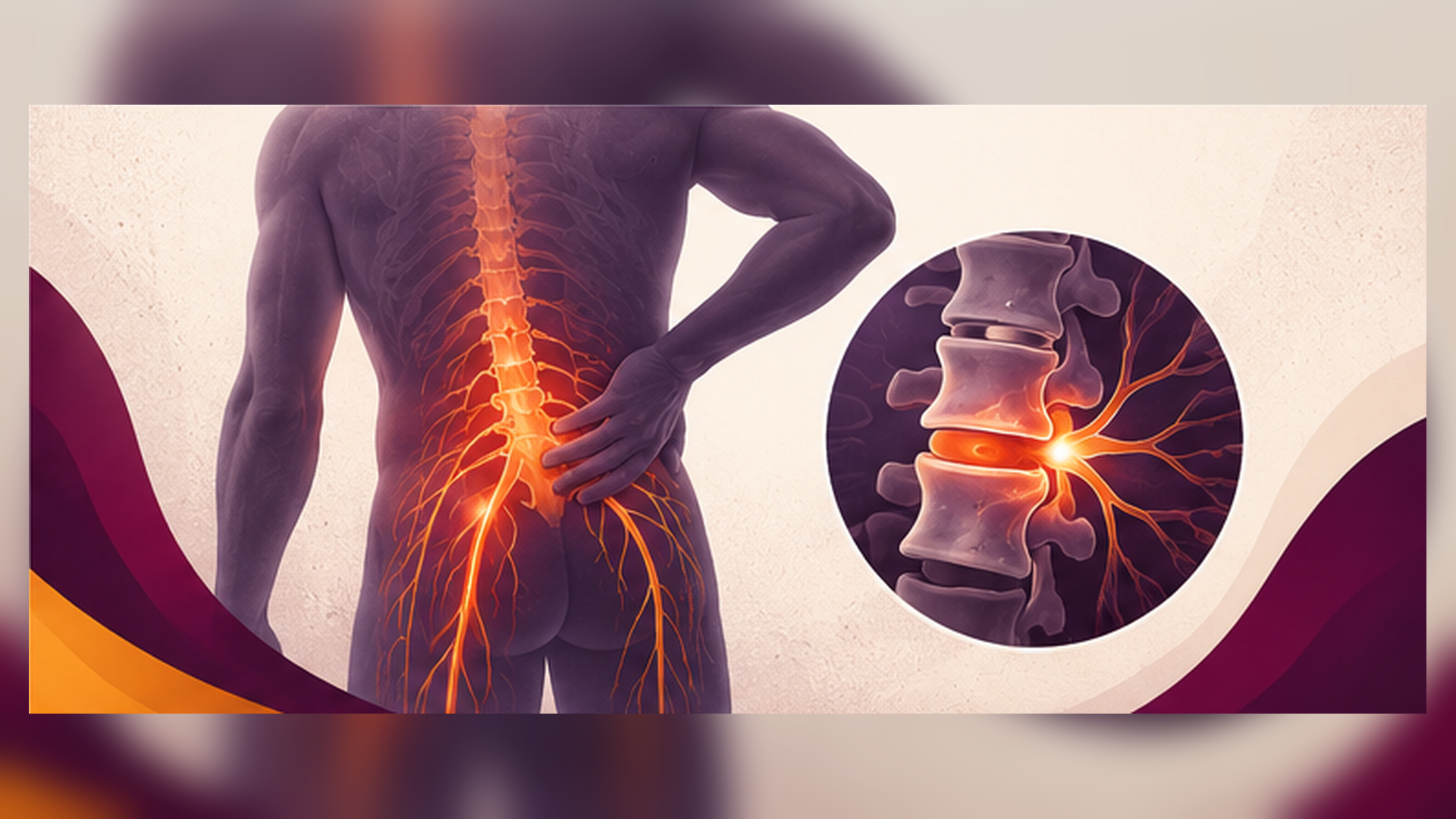
What Causes Lower Back Pain That Radiates Into the Legs?
Lower back pain that travels into the buttock, thigh, calf, or foot can be painful, distracting, and difficult to understand. The discomfort may begin as an ache in the lower spine and then spread into one leg. For some people, it feels sharp or electric. Others experience burning, tingling, numbness, cramping, or leg weakness.
This pattern is commonly associated with sciatica pain or lumbar radiculopathy. Both terms describe symptoms that may develop when a nerve root in the lower spine becomes irritated, inflamed, or compressed.
Lower back and leg pain can come from a herniated disc, spinal stenosis, degenerative changes, bone spurs, or other conditions that reduce space around the spinal nerves. However, not every pain that travels into the leg is caused by sciatica. Hip problems, sacroiliac joint pain, muscle conditions, peripheral neuropathy, and circulation problems may produce similar symptoms.
At Vertex Pain Physicians, patients receive personalized evaluations to determine what is causing their lower back and leg pain. If you are searching for a back pain doctor San Antonio TX, sciatica treatment San Antonio, or lower back pain treatment San Antonio, identifying the true source of your symptoms is the first step.
What Does Radiating Lower Back Pain Mean?
Radiating pain is discomfort that begins in one part of the body and travels into another area. When pain begins in the lower back and moves into the buttock or leg, it may mean that a spinal nerve is irritated.
The nerves in the lower spine carry signals to and from the hips, legs, and feet. If one of these nerves becomes compressed or inflamed, symptoms may be felt anywhere along the nerve pathway.
Radiating lower back pain may feel like:
- Sharp pain moving from the back into the leg
- Burning pain in the buttock, thigh, calf, or foot
- Electric shock-like sensations
- Tingling or pins and needles
- Numbness in the leg or foot
- Cramping or aching in the leg
- Weakness in the leg, ankle, or foot
- Pain that worsens with sitting, bending, coughing, or sneezing
Some patients experience mostly leg pain with very little back pain. Others have pain in both the lower back and leg.
What Is Sciatica Pain?
Sciatica pain refers to a group of symptoms that follow the sciatic nerve pathway. The sciatic nerve is formed by several nerve roots in the lower spine and travels through the buttock and down the leg.
Sciatica commonly affects one side of the body. Pain may travel from the lower back into the buttock, behind the thigh, through the calf, and sometimes into the foot or toes.
Sciatica is a symptom pattern rather than a single disease. The cause may be a herniated disc, spinal stenosis, degenerative disc disease, or another condition affecting the lower spinal nerves.
Common sciatica symptoms include:
- Lower back pain radiating to legs
- Pain through one buttock
- Burning or shooting leg pain
- Numbness or tingling
- Pain below the knee
- Leg or foot weakness
- Pain that worsens with prolonged sitting
- Difficulty standing or walking comfortably
A sciatica doctor San Antonio patients visit should determine which spinal structure is irritating the nerve before recommending treatment.
What Is Lumbar Radiculopathy?
Lumbar radiculopathy is a medical term used when a nerve root in the lower spine is compressed, inflamed, or damaged. It may cause pain, numbness, tingling, weakness, or changes in reflexes along the path of that nerve.
Sciatica is one common form of lumbar radiculopathy. However, lumbar radiculopathy can affect different nerve roots and produce symptoms in different areas of the leg.
For example, one irritated nerve root may cause pain in the front of the thigh, while another may cause pain along the outside of the leg or into the foot.
Lumbar radiculopathy may cause:
- Lower back and leg pain
- Numbness in a specific part of the leg
- Tingling in the foot or toes
- Weakness in the thigh, calf, ankle, or foot
- Reduced reflexes
- Difficulty lifting the foot
- Pain that follows a clear nerve pathway
A physical examination can help determine which nerve root may be affected.
Common Causes of Lower Back Pain Radiating to the Legs
Several conditions can irritate the nerves in the lumbar spine. The most appropriate treatment depends on which condition is causing the symptoms.
Herniated Disc
Spinal discs sit between the vertebrae and help cushion the spine. A herniated disc occurs when material from inside the disc pushes outward and irritates or compresses a nearby nerve root.
A lumbar herniated disc is one of the most common causes of sciatica pain. Symptoms may begin after heavy lifting, twisting, bending, or another strain, although they may also develop gradually.
Herniated disc symptoms may include:
- Sharp lower back and leg pain
- Pain that worsens while sitting
- Burning or shooting pain
- Tingling or numbness
- Pain made worse by coughing or sneezing
- Weakness in the affected leg
The severity of symptoms does not always match the size of the disc herniation. Some small disc changes can cause significant pain if they irritate a nerve.
Lumbar Spinal Stenosis
Lumbar spinal stenosis occurs when the spinal canal or openings around the nerves become narrower. This narrowing may place pressure on the spinal nerves.
Spinal stenosis often develops gradually due to arthritis, thickened ligaments, disc changes, or bone spurs. It is more common as people age.
Symptoms of lumbar spinal stenosis may include:
- Lower back pain
- Pain or heaviness in both legs
- Numbness or tingling
- Symptoms that worsen while standing or walking
- Relief when sitting or bending forward
- Leg fatigue or weakness
- Difficulty walking longer distances
Patients with spinal stenosis may describe needing to lean forward over a shopping cart to walk more comfortably.
Degenerative Disc Disease
Degenerative disc disease describes age-related changes in the spinal discs. As discs lose height and flexibility, the space around the nerves may become smaller.
Disc degeneration may also contribute to inflammation, bone spurs, or instability in the lower spine. These changes can cause back pain alone or lower back pain radiating into the legs.
Degenerative disc symptoms may include:
- Chronic lower back pain
- Pain that worsens with sitting or bending
- Intermittent leg pain
- Stiffness
- Painful flare-ups
- Numbness or tingling when nerves are involved
Degenerative changes are common, but they do not always cause pain. Treatment should be based on symptoms and examination findings, not imaging alone.
Bone Spurs and Arthritis
Arthritis in the small joints of the spine may lead to inflammation and the development of bone spurs. These extra areas of bone can narrow the spaces where spinal nerves exit.
When a bone spur presses on a nerve root, it may cause lumbar radiculopathy, sciatica pain, numbness, or weakness.
Patients may also have stiffness, reduced range of motion, and pain that worsens after standing or walking.
Spondylolisthesis
Spondylolisthesis occurs when one vertebra shifts forward over another. This movement may narrow the space around a nerve and cause lower back and leg pain.
The condition may result from age-related degeneration, a stress injury, trauma, or a structural problem in the spine.
Possible symptoms include:
- Lower back pain
- Tight hamstrings
- Pain in the buttocks or legs
- Numbness or tingling
- Pain while standing or walking
- Muscle weakness
The severity of the vertebral shift and the degree of nerve compression help determine treatment.
Scar Tissue or Post-Surgical Changes
Some patients experience ongoing nerve pain after lumbar spine surgery. This may happen because of scar tissue, continued nerve irritation, recurrent disc problems, or structural changes in the spine.
Post-surgical pain does not always mean the surgery failed. Nerves can remain sensitive after prolonged compression, and new pain sources may develop over time.
A pain specialist may review operative records, updated imaging, symptoms, and previous treatment response before recommending care.
Other Conditions That Can Mimic Sciatica
Not all nerve pain in legs begins in the spine. Several other problems can cause pain in the buttock, thigh, or lower leg.
Conditions that may resemble sciatica include:
- Sacroiliac joint pain
- Hip arthritis
- Piriformis-related pain
- Muscle strain
- Peripheral neuropathy
- Knee conditions
- Vascular disease
- Hamstring injury
- Post-traumatic pain
- Tumors or infections in rare cases
This is why a proper examination is important. Treating the lower spine will not help if the pain is actually coming from the hip, SI joint, or another structure.
How Doctors Diagnose Lower Back and Leg Pain
A back pain doctor San Antonio TX patients visit will usually begin by asking detailed questions about the symptoms.
The provider may ask where the pain begins, how far it travels, which movements make it worse, and whether numbness or weakness is present.
The evaluation may include:
- Medical history
- Review of previous injuries or surgeries
- Physical examination
- Strength testing
- Reflex testing
- Sensation testing
- Range-of-motion assessment
- Straight-leg raise testing
- Review of previous imaging
- MRI or other imaging when appropriate
Imaging is not always needed immediately. It may be recommended when symptoms are severe, persistent, worsening, or associated with neurological changes.
Lower Back Pain Treatment Options in San Antonio
Lower back pain treatment San Antonio patients receive should be based on the diagnosis, symptom severity, and effect on daily function.
Many cases begin with conservative care. More targeted treatments may be considered if symptoms do not improve.
Conservative treatment options may include:
- Activity modification
- Physical therapy
- Guided stretching and strengthening
- Heat or ice
- Posture improvements
- Medication management when appropriate
- Avoiding prolonged bed rest
- Gradual return to normal activity
The goal is to reduce irritation while maintaining safe movement and strength.
Epidural Steroid Injections
An epidural steroid injection places anti-inflammatory medication near irritated spinal nerves. It may be considered for sciatica, lumbar radiculopathy, herniated disc pain, or spinal stenosis-related symptoms.
The injection does not remove a herniated disc or permanently widen the spinal canal. Its purpose is to reduce inflammation and provide enough relief for patients to move, sleep, or participate in physical therapy more comfortably.
Other Interventional Treatments
Depending on the source of pain, a pain management clinic San Antonio patients visit may discuss additional procedures.
Options may include:
- Medial branch nerve blocks
- Radiofrequency ablation
- Sacroiliac joint injections
- Trigger point injections
- Spinal cord stimulation
- Peripheral nerve stimulation
- Minimally invasive lumbar decompression for selected spinal stenosis
- Surgical referral when necessary
Not every treatment is appropriate for every patient. A clear diagnosis should guide the recommendation.
When Is Surgery Considered?
Many patients with lower back and leg pain do not need surgery. Surgery may be considered when symptoms remain severe despite appropriate treatment or when significant nerve compression is causing progressive neurological problems.
Surgery may be discussed when there is:
- Worsening leg weakness
- Severe nerve compression
- Inability to walk or function despite treatment
- Persistent disabling pain
- Structural instability
- Loss of bladder or bowel control
- Cauda equina syndrome
- A condition unlikely to improve without surgical correction
The goal should not be to avoid surgery at all costs. The goal is to choose the safest treatment based on the diagnosis and severity of symptoms.
When Should You See a Spine Specialist in San Antonio?
You should consider seeing a spine specialist San Antonio or pain specialist if radiating pain lasts more than a few weeks, keeps returning, or interferes with daily life.
Schedule an evaluation if you have:
- Lower back pain radiating to legs
- Persistent sciatica pain
- Burning or shooting nerve pain in legs
- Numbness or tingling
- Pain below the knee
- Difficulty walking or standing
- Symptoms affecting sleep or work
- Leg weakness
- Pain that has not improved with home care
- Recurrent episodes of lower back and leg pain
Early evaluation may help prevent symptoms from becoming more limiting.
Warning Signs That Need Urgent Medical Care
Most cases of sciatica are not medical emergencies. However, certain symptoms may indicate severe nerve compression or another serious condition.
Seek urgent medical care if you develop:
- New loss of bladder or bowel control
- Numbness around the groin or inner thighs
- Sudden or rapidly worsening leg weakness
- Severe pain after a major injury
- Fever with severe back pain
- Unexplained weight loss
- History of cancer with new severe back pain
- Pain affecting both legs with significant weakness
- Inability to stand or walk safely
These symptoms should not wait for a routine appointment.
Why Choose Vertex Pain Physicians in San Antonio?
Vertex Pain Physicians provides personalized pain management services for patients experiencing acute and chronic pain in San Antonio.
For patients with lower back and leg pain, the specialists may evaluate spinal discs, nerve roots, facet joints, sacroiliac joints, muscles, and other possible pain sources.
Patients choose Vertex Pain Physicians for:
- Personalized back and leg pain evaluations
- Sciatica treatment San Antonio options
- Care for lumbar radiculopathy
- Interventional pain management procedures
- Minimally invasive treatment options when appropriate
- Care for herniated discs and spinal stenosis
- Treatment focused on movement, comfort, and function
If you are searching for a pain management clinic San Antonio or a back pain doctor San Antonio TX, Vertex Pain Physicians can help you understand what may be causing your symptoms.
Conclusion: Radiating Leg Pain Often Begins With an Irritated Spinal Nerve
Lower back pain that radiates into the legs is often caused by irritation or compression of a nerve root in the lumbar spine. Common causes include herniated discs, spinal stenosis, degenerative disc disease, bone spurs, arthritis, and spondylolisthesis.
Sciatica pain and lumbar radiculopathy may cause shooting pain, burning, tingling, numbness, or weakness. Because other conditions can produce similar symptoms, the right treatment begins with an accurate diagnosis.
If lower back and leg pain is affecting your sleep, walking, work, or daily activities, Vertex Pain Physicians can help. To find the most convenient location, contact Vertex Pain Physicians. To discuss lower back pain treatment San Antonio options with a pain specialist, request an appointment today.
FAQs
What causes lower back pain that radiates into the legs?
Common causes include herniated discs, spinal stenosis, degenerative disc disease, bone spurs, arthritis, and spondylolisthesis. These conditions may irritate or compress spinal nerve roots.
Is lower back pain radiating to the legs always sciatica?
No. Sciatica is a common cause, but hip problems, sacroiliac joint pain, muscle conditions, peripheral neuropathy, and circulation problems can produce similar symptoms.
What does sciatica pain feel like?
Sciatica pain may feel sharp, shooting, burning, electric, or aching. It commonly travels from the lower back or buttock into one leg.
What is lumbar radiculopathy?
Lumbar radiculopathy occurs when a nerve root in the lower spine is compressed, irritated, or damaged. It may cause pain, numbness, tingling, weakness, or reflex changes.
Can a herniated disc cause nerve pain in the legs?
Yes. A herniated lumbar disc can irritate a nearby nerve root and cause pain, numbness, tingling, or weakness that travels into the leg.
Can spinal stenosis cause pain in both legs?
Yes. Lumbar spinal stenosis may cause pain, heaviness, numbness, or weakness in one or both legs, especially during standing or walking.
How is sciatica diagnosed?
Diagnosis may involve a medical history, physical examination, strength and reflex testing, sensation testing, and imaging when symptoms are severe or persistent.
What treatments help lower back and leg pain?
Treatment may include physical therapy, activity changes, medication management, epidural steroid injections, nerve blocks, minimally invasive procedures, or surgery in selected cases.
When should I see a back pain doctor in San Antonio?
See a back pain doctor if symptoms last more than a few weeks, limit walking, cause numbness or weakness, affect sleep, or keep returning despite home care.
Where can I find sciatica treatment in San Antonio?
Patients looking for sciatica treatment San Antonio can contact Vertex Pain Physicians for a personalized evaluation and treatment plan.
Medical Disclaimer
This article is for educational purposes only and should not replace professional medical advice, diagnosis, or treatment. Lower back and leg pain should be evaluated by a qualified healthcare provider when it is severe, persistent, worsening, or associated with numbness or weakness. Seek urgent medical care for loss of bladder or bowel control, groin numbness, rapidly worsening weakness, fever, major trauma, or other serious symptoms.