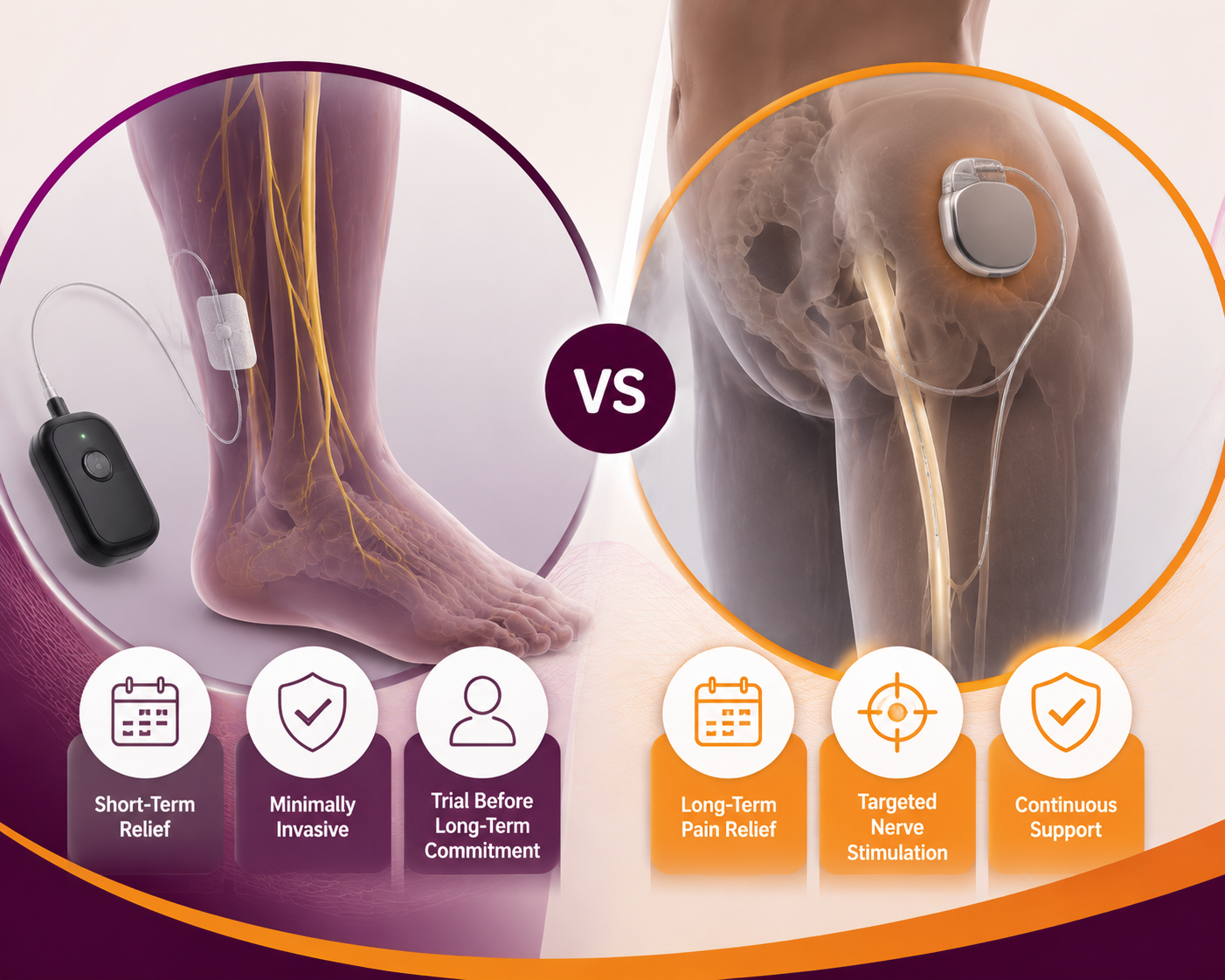
Temporary vs Permanent Peripheral Nerve Stimulation Devices Explained
Chronic nerve pain can be difficult to manage, especially when medication, physical therapy, injections, or conservative care do not provide enough relief. For patients with pain coming from a specific peripheral nerve, peripheral nerve stimulation may be an advanced treatment option.
Peripheral nerve stimulation, also called PNS, is a form of neuromodulation. It uses mild electrical pulses to change how pain signals travel from a targeted nerve to the brain. For some patients, this can help reduce pain and improve daily function without major surgery.
At Vertex Pain Physicians., our pain specialists in San Antonio, TX, evaluate chronic pain carefully before recommending advanced treatments. If you are comparing temporary vs permanent peripheral nerve stimulation, understanding how each option works can help you have a more informed discussion with your provider.
What Is Peripheral Nerve Stimulation?
Peripheral nerve stimulation is a nerve stimulation treatment for pain that targets nerves outside the brain and spinal cord. These nerves may be involved in pain affecting the back, shoulder, knee, arm, leg, foot, or other areas of the body.
During PNS treatment, a small lead or thin wire is placed near the targeted nerve. The device sends gentle electrical impulses to the nerve. These impulses may help disrupt or modify pain signals before they reach the brain.
What Types of Pain Can PNS Help Treat?
Peripheral nerve stimulation for chronic pain may be considered for selected patients with focal, nerve-related pain. This may include certain cases of:
- Neuropathic pain
- Post-surgical nerve pain
- Post-traumatic nerve pain
- Chronic shoulder pain
- Chronic knee pain
- Chronic low back pain from selected nerve sources
- Pain after injury
- Peripheral nerve irritation
- Pain that has not responded well to conservative care
PNS is not the right treatment for every pain condition. It works best when the pain source can be linked to a specific peripheral nerve or nerve pathway.
Temporary vs Permanent Peripheral Nerve Stimulation: What Is the Difference?
The main difference between temporary and permanent peripheral nerve stimulation is how long the device is intended to stay in the body and how the treatment is structured.
Temporary PNS devices are usually designed for short-term use. Some systems are used for a limited treatment period and then removed. Others may be used as a trial before deciding whether a longer-term device is appropriate.
Permanent PNS devices are designed for long-term implantation. These systems may include implanted leads and a small pulse generator or receiver that continues to provide stimulation over time.
Temporary PNS in Simple Terms
Temporary peripheral nerve stimulation uses a lead placed near the target nerve for a limited period. The external part of the device helps deliver stimulation during the treatment window.
After the treatment period, the lead is removed. In some patients, pain relief may continue after removal, although results vary.
Permanent PNS in Simple Terms
Permanent peripheral nerve stimulation involves placing a longer-term device near the targeted nerve. The system may include an implanted lead and a pulse generator or receiver. Some devices use an external controller or wearable power source to manage stimulation.
Permanent PNS is typically considered when chronic pain is expected to require ongoing neuromodulation support.
How Temporary Peripheral Nerve Stimulation Devices Work
Temporary PNS devices are often used when a provider wants to treat pain for a defined period or evaluate whether nerve stimulation is helpful for a patient’s symptoms.
A thin lead is placed near the target nerve using image guidance. The patient then uses the device according to the provider’s instructions. The treatment is adjusted based on comfort, response, and goals.
Benefits of Temporary PNS Devices
Temporary peripheral nerve stimulation may offer several benefits for selected patients.
These may include:
- No long-term implanted generator
- Limited treatment duration
- Minimally invasive placement
- Ability to evaluate response to stimulation
- Potential pain relief without major surgery
- May help patients avoid or delay more invasive options
- Can be useful for certain post-surgical, post-traumatic, or chronic nerve pain cases
Temporary PNS may be especially helpful for patients who want to explore nerve stimulation treatment for pain but are not ready for a permanent implant.
Limitations of Temporary PNS Devices
Temporary PNS also has limitations. It may not provide enough relief for every patient, and the device is removed after the treatment period. Some patients may experience short-term improvement, while others may need a different treatment plan.
Temporary devices also require careful care of the lead site and follow-up with the pain management team.
How Permanent Peripheral Nerve Stimulation Devices Work
Permanent PNS devices are intended for longer-term use. These systems are usually considered after a careful evaluation, and in some cases, after a successful trial period.
The device is placed near the targeted peripheral nerve. Once active, it delivers controlled electrical stimulation to help reduce pain signals.
Benefits of Permanent PNS Devices
Permanent peripheral nerve stimulation devices may be helpful for patients with long-term, nerve-related pain that has not improved enough with other treatments.
Potential benefits include:
- Ongoing stimulation for chronic pain control
- Targeted treatment for a specific nerve source
- May reduce reliance on certain oral pain medications in some patients
- Can support improved function and mobility
- Adjustable therapy settings
- Long-term option for selected chronic pain conditions
Permanent PNS may be considered when pain is persistent, clearly localized, and likely to need continued treatment support.
Limitations of Permanent PNS Devices
Permanent PNS is more involved than temporary treatment. It requires implantation of a long-term device, follow-up care, and monitoring.
Possible risks may include infection, bleeding, lead movement, device discomfort, stimulation changes, hardware issues, or the need for revision or removal. Patients should review risks and benefits with a qualified pain specialist before choosing this option.
Temporary PNS vs Permanent PNS: Which One Is Better?
Neither option is automatically better for every patient. The right choice depends on the diagnosis, pain location, treatment goals, medical history, and response to previous care.
Temporary PNS may be preferred when:
- The patient wants a limited treatment period
- The provider wants to assess response to stimulation
- Pain may improve after a short-term neuromodulation course
- The patient wants to avoid a long-term implant
- The pain condition may not require continuous stimulation
Permanent PNS may be preferred when:
- Pain is long-lasting and severe
- The pain source is clearly linked to a target nerve
- Temporary treatment or trial stimulation shows meaningful relief
- Ongoing stimulation is expected to be helpful
- Other treatments have not provided enough improvement
A pain specialist can help determine which device type fits the patient’s condition.
Who May Be a Good Candidate for PNS?
Peripheral nerve stimulation may be considered for adults with chronic pain that has not responded well to conservative care. Candidates usually have pain that can be traced to a specific peripheral nerve or region.
A provider may evaluate PNS for patients with:
- Focal neuropathic pain
- Nerve pain after surgery
- Nerve pain after trauma
- Chronic extremity pain
- Certain chronic back, shoulder, or knee pain patterns
- Pain that limits daily activity
- Pain that has not improved with physical therapy, medication, or injections
Patients searching for a neuropathic pain management clinic in San Antonio, TX, should look for a provider experienced in diagnosing nerve-related pain and offering interventional treatment options.
What Happens Before PNS Treatment?
Before recommending PNS, your pain specialist will perform a full evaluation. This may include a medical history review, physical exam, imaging review, nerve-related testing when needed, and discussion of previous treatments.
The goal is to confirm whether the pain is likely coming from a targetable peripheral nerve.
Questions Your Provider May Ask
Your provider may ask:
- Where is your pain located?
- Does the pain feel burning, shooting, tingling, or electric?
- How long have symptoms been present?
- What treatments have you already tried?
- Does pain limit walking, sleeping, working, or daily tasks?
- Have you had previous surgery or injury in the painful area?
These details help determine whether peripheral nerve stimulation devices may be appropriate.
Is Peripheral Nerve Stimulation the Same as Spinal Cord Stimulation?
No. Peripheral nerve stimulation and spinal cord stimulation are both neuromodulation treatments, but they target different areas.
Peripheral nerve stimulation targets nerves outside the brain and spinal cord. Spinal cord stimulation targets pain signaling near the spinal cord.
Both treatments may be used for chronic pain, but the best choice depends on the pain pattern and diagnosis.
Peripheral Nerve Stimulation in San Antonio
If you are looking for peripheral nerve stimulation in San Antonio, Vertex Pain Physicians. can help you explore whether PNS is right for your condition.
Our team provides pain management in San Antonio, TX, for patients with chronic and acute pain, including neuropathic pain, back pain, neck pain, sciatica pain, post-surgical back pain, musculoskeletal pain, sacroiliac joint pain, spinal stenosis, and other pain conditions.
Vertex Pain Physicians also offers additional interventional treatments, including Epidural Steroid Injection, Medial Branch Nerve Blocks, Radiofrequency Ablation, Joint Injections, Sacroiliac Joint Injections, Trigger Point Injections, Spinal Cord Stimulation, Balloon Kyphoplasty, Intrathecal Pump Implant/Targeted Drug Delivery, and the mild® Procedure.
As Vertex continues to grow, the practice is expanding care through new staff, new locations, and communities, including San Antonio, Alamo Heights, Stone Oak, Kerr County, Gillespie County, and nearby areas.
Conclusion
Temporary and permanent peripheral nerve stimulation devices both use electrical stimulation to help manage selected nerve-related pain. Temporary PNS may be useful for limited-duration treatment or evaluation, while permanent PNS may be considered for longer-term chronic pain control.
The right choice depends on your pain source, medical history, treatment goals, and response to previous care. A proper diagnosis is essential before choosing either option.
If you are looking for a pain management clinic in San Antonio, TX, Vertex Pain Physicians. can help you explore advanced treatment options for chronic nerve pain. Call 210-545-0087 or connect online, refer a patient, or learn how Vertex Pain Physicians can support your care.
FAQs About Temporary and Permanent PNS Devices
What is the main difference between temporary and permanent peripheral nerve stimulation?
Temporary PNS is designed for a limited treatment period or trial use, while permanent PNS is designed for longer-term implantation and ongoing stimulation.
Is temporary PNS removed after treatment?
Yes. Temporary PNS leads are removed after the intended treatment period. Your provider will explain how long the device is expected to stay in place based on the system and your treatment plan.
Does permanent PNS stay in forever?
Permanent PNS is designed for long-term use, but it does not necessarily mean the device must stay in forever. It may need adjustment, replacement, revision, or removal depending on the patient’s response and medical needs.
Is peripheral nerve stimulation painful?
Patients may feel pressure or mild discomfort during placement, but local anesthetic is often used. During therapy, stimulation should be comfortable and adjustable. Any uncomfortable stimulation should be reported to your provider.
Can PNS reduce the need for pain medication?
Some patients may reduce reliance on certain pain medications if PNS provides meaningful relief. Medication changes should only be made under medical supervision.
Who should I see for peripheral nerve stimulation in San Antonio?
A pain specialist in San Antonio, TX, who has experience with neuropathic pain and interventional pain management can evaluate whether PNS is appropriate for your condition.
Medical Disclaimer
This article is for educational purposes only and should not replace professional medical advice, diagnosis, or treatment. Always consult a qualified healthcare provider to discuss your symptoms and determine whether peripheral nerve stimulation is appropriate for you.