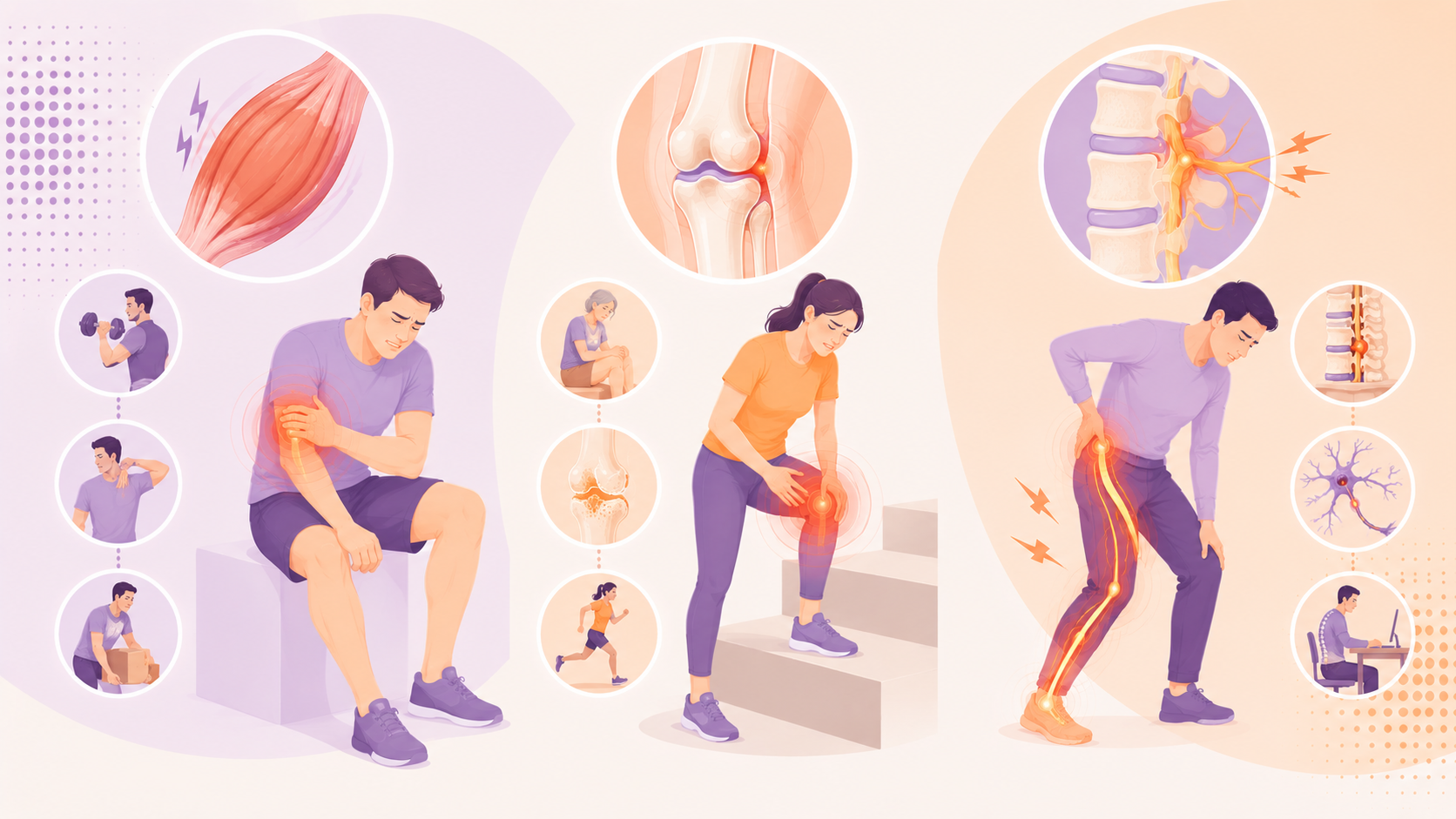
Pain When Moving: Is It Muscle Pain, Joint Pain, or Nerve Pain?
Pain when moving can be confusing because it does not always come from the same place. One person may feel soreness after lifting something heavy. Another may feel sharp pain deep inside a knee or hip. Someone else may feel burning, tingling, or electric pain that travels down an arm or leg.
When pain affects your movement, the first question is often: is this muscle pain, joint pain, or nerve pain? Understanding the difference can help you know when home care may be enough and when it is time to see a pain doctor San Antonio TX patients trust.
Muscle pain vs joint pain can sometimes feel similar, especially when pain happens near the shoulder, hip, back, or knee. Nerve pain symptoms can also overlap with muscle or joint problems. That is why a proper evaluation matters when pain keeps coming back, worsens, or limits daily life.
At Vertex Pain Physicians, patients in San Antonio receive personalized evaluations for acute and chronic pain conditions, including musculoskeletal pain, joint pain, nerve pain, back pain, neck pain, hip pain, and pain after injury or surgery. If you are searching for musculoskeletal pain treatment, joint pain treatment San Antonio, or a nerve pain specialist San Antonio, the first step is identifying the source of pain.
Why Pain When Moving Happens
Movement-related pain can come from muscles, joints, nerves, tendons, ligaments, discs, or inflamed soft tissues. Sometimes pain is caused by a clear injury, such as lifting, falling, twisting, or overuse. Other times, pain develops slowly because of arthritis, posture strain, nerve irritation, or chronic inflammation.
Pain when moving is the body’s way of signaling that something is irritated, overloaded, inflamed, compressed, or not functioning properly.
Common causes of pain when moving include:
- Muscle strain or overuse
- Joint inflammation
- Arthritis or degenerative joint disease
- Tendon or ligament irritation
- Nerve compression or irritation
- Herniated disc pain
- Sciatica
- Sacroiliac joint pain
- Poor posture or repetitive movement
- Post-traumatic or post-surgical pain
Because several conditions can create similar symptoms, guessing can lead to delayed treatment. A pain management clinic San Antonio patients visit can help determine whether the pain is muscular, joint-related, nerve-related, or a combination.
Muscle Pain vs Joint Pain: What Is the Difference?
Muscle pain usually comes from the soft tissues that help move and support the body. Joint pain comes from the structures where two bones meet, such as the knee, hip, shoulder, elbow, or spine joints.
Muscle pain may feel sore, tight, cramping, or tender. Joint pain may feel deeper, sharper, stiff, swollen, or painful with weight-bearing movement.
Muscle pain often feels like:
- Soreness or aching
- Tightness or spasms
- Tenderness when pressing the area
- Pain after exercise or lifting
- Pain that improves with rest
- Cramping or pulling sensation
- Pain that changes with stretching
Joint pain often feels like:
- Deep pain inside the joint
- Stiffness after rest
- Swelling or warmth
- Grinding, clicking, or catching
- Pain with walking, stairs, or gripping
- Reduced range of motion
- Pain that worsens with pressure on the joint
The difference is not always obvious. For example, hip arthritis may feel like thigh pain, while muscle strain around the hip may feel like joint pain. A proper exam helps separate the two.
What Muscle Pain Usually Means
Muscle pain is often related to strain, overuse, tension, or inflammation. It may happen after exercise, heavy lifting, repetitive work, poor posture, or sudden movement.
Muscle pain can also develop when another condition changes the way you move. For example, knee pain may cause you to walk differently, which can lead to hip, back, or leg muscle soreness.
Common causes of muscle pain include:
- Muscle strain
- Overuse injury
- Poor posture
- Repetitive motion
- Trigger points
- Muscle spasms
- Deconditioning or weakness
- Stress-related tension
- Compensation from another painful area
A muscle pain doctor San Antonio patients visit may evaluate whether pain is limited to the muscle or whether it is connected to a deeper joint, spine, or nerve issue.
When muscle pain may need care
Mild muscle soreness often improves with rest, hydration, stretching, and gentle movement. However, muscle pain should be evaluated if it does not improve or keeps returning.
You should consider care if muscle pain:
- Lasts more than a few weeks
- Gets worse with normal activity
- Causes frequent spasms
- Limits walking or lifting
- Comes with weakness
- Follows an injury
- Does not improve with basic home care
Muscle pain that becomes chronic may require a more complete musculoskeletal pain treatment plan.
What Joint Pain Usually Means
Joint pain can come from arthritis, inflammation, injury, cartilage wear, ligament problems, or degenerative changes. It may affect the knees, hips, shoulders, hands, spine, or other joints.
Joint pain often becomes more noticeable during movement because joints carry load and help the body bend, turn, reach, walk, and stand. When joint structures are irritated, movement can trigger pain.
Common joint pain causes include:
- Osteoarthritis
- Degenerative joint disease
- Joint inflammation
- Cartilage damage
- Ligament injury
- Bursitis
- Tendon irritation near the joint
- Sacroiliac joint dysfunction
- Post-traumatic joint pain
- Post-surgical joint pain
Joint pain treatment San Antonio may include a combination of diagnosis, medication review, therapy, injections, lifestyle changes, and interventional pain procedures when appropriate.
Signs your pain may be joint-related
Joint-related pain may include:
- Pain deep inside the joint
- Swelling or stiffness
- Pain with weight-bearing
- Pain that worsens with stairs
- Limited range of motion
- Catching, locking, or grinding
- Pain after sitting or resting
- Tenderness around the joint line
If joint pain keeps limiting your mobility, an evaluation can help determine whether arthritis, inflammation, injury, or another condition is involved.
What Nerve Pain Usually Means
Nerve pain can feel very different from muscle or joint pain. It may feel burning, shooting, electric, tingling, numb, or hypersensitive. Nerve pain may travel from one area to another, such as from the lower back into the leg or from the neck into the arm.
Nerve pain symptoms often happen when a nerve is irritated, compressed, inflamed, or damaged. The problem may be in the spine, peripheral nerves, or surrounding tissues.
Common nerve pain symptoms include:
- Burning pain
- Shooting or electric pain
- Tingling or pins and needles
- Numbness
- Pain that travels down an arm or leg
- Sensitivity to touch
- Weakness
- Pain that feels hot or cold
- Pain that follows a nerve path
A nerve pain specialist San Antonio patients trust can help identify whether symptoms are related to sciatica, herniated disc pain, spinal stenosis, neuropathic pain, nerve compression, or another nerve condition.
Common causes of nerve pain
Nerve pain may be caused by:
- Herniated disc
- Sciatica
- Spinal stenosis
- Degenerative disc disease
- Peripheral neuropathy
- Post-surgical nerve irritation
- Diabetes-related nerve damage
- Trauma
- Nerve entrapment
- Inflammation around nerve tissue
Nerve pain often needs a different treatment plan than muscle pain or joint pain. That is why diagnosis is important.
How to Tell the Difference by Pain Location
Pain location can provide clues, but it does not always give the full answer. Pain can travel, refer, or overlap between body systems.
For example, lower back nerve pain may feel like leg pain. Hip joint pain may feel like groin or thigh pain. Neck nerve pain may feel like shoulder or arm pain.
Pain location clues may include:
- Muscle pain: often felt in soft tissue or tender areas
- Joint pain: often felt deep in the joint or near the joint line
- Nerve pain: often travels along a path into an arm, leg, hand, or foot
- Spine-related pain: may cause back or neck pain with radiating symptoms
- Sacroiliac pain: may affect the low back, buttock, hip, or thigh
A pain doctor San Antonio TX patients visit can perform an exam and review your symptoms to determine whether pain location matches the suspected cause.
How Doctors Diagnose Pain When Moving
A proper diagnosis starts with listening to the patient’s symptoms. Your provider may ask when the pain started, what movements make it worse, what helps, and whether symptoms include weakness, numbness, swelling, stiffness, or radiating pain.
The exam may include checking movement, strength, reflexes, tenderness, joint motion, posture, and nerve-related signs.
Your evaluation may include:
- Review of pain location and pattern
- Medical history
- Medication history
- Physical exam
- Range of motion testing
- Strength and reflex testing
- Review of prior imaging
- Imaging or diagnostic testing when needed
- Discussion of previous treatments
- Functional goals and activity limitations
This helps determine whether the pain is muscle-related, joint-related, nerve-related, or connected to multiple pain sources.
Musculoskeletal Pain Treatment Options
Musculoskeletal pain treatment depends on the cause. Some patients need simple conservative care. Others may need injections, nerve blocks, radiofrequency ablation, physical therapy, or advanced pain management procedures.
The goal is to reduce pain, improve movement, and help patients return to daily activities safely.
Treatment options may include:
- Physical therapy
- Home exercise guidance
- Activity modification
- Anti-inflammatory strategies
- Trigger point injections
- Joint injections
- Sacroiliac joint injections
- Epidural steroid injections for nerve-related spine pain
- Medial branch nerve blocks
- Radiofrequency ablation for selected pain patterns
- Peripheral nerve stimulation
- Spinal cord stimulation
- Medication management when appropriate
At Vertex Pain Physicians, treatment is customized based on the pain source, severity, patient goals, and overall health.
When to See a Pain Doctor in San Antonio
You should consider seeing a pain doctor San Antonio TX patients trust if pain when moving is not improving, keeps returning, or affects your ability to work, sleep, walk, or exercise.
Pain should also be evaluated if symptoms suggest nerve involvement or if pain began after an injury.
Schedule an evaluation if you have:
- Pain lasting more than a few weeks
- Pain that worsens with movement
- Pain that limits walking or standing
- Numbness or tingling
- Burning or shooting pain
- Joint swelling or stiffness
- Muscle spasms that keep returning
- Pain after an injury or surgery
- Weakness in an arm or leg
- Pain that affects sleep or daily activity
Seek urgent medical care if you have sudden weakness, loss of bladder or bowel control, fever, severe trauma, chest pain, unexplained weight loss, or rapidly worsening symptoms.
Why Choose Vertex Pain Physicians in San Antonio?
Vertex Pain Physicians provides pain management services in San Antonio for patients living with acute and chronic pain. The specialists focus on uncovering the cause of pain and building personalized treatment plans.
For patients with pain when moving, the care team may evaluate muscle pain, joint pain, nerve pain, spine-related pain, sacroiliac joint pain, and musculoskeletal pain patterns. Treatment may include conservative care, injections, nerve blocks, radiofrequency ablation, peripheral nerve stimulation, spinal cord stimulation, or other pain management options when appropriate.
Patients choose Vertex Pain Physicians for:
- Personalized pain evaluations
- Musculoskeletal pain treatment
- Joint pain treatment San Antonio options
- Nerve pain evaluation and treatment planning
- Chronic and acute pain care
- Minimally invasive pain procedures when appropriate
- San Antonio pain management services focused on function and quality of life
If you are searching for a pain management clinic San Antonio, muscle pain doctor San Antonio, or nerve pain specialist San Antonio, Vertex Pain Physicians can help you understand what may be causing your symptoms.
Conclusion: The Right Treatment Starts With the Right Pain Source
Pain when moving can come from muscles, joints, nerves, or more than one source at the same time. Muscle pain may feel sore, tight, or tender. Joint pain may feel deep, stiff, swollen, or painful with weight-bearing movement. Nerve pain symptoms may include burning, tingling, numbness, or shooting pain that travels.
Because these pain types can overlap, the best next step is a proper evaluation. A personalized diagnosis can help guide the right treatment instead of guessing.
If pain when moving is limiting your work, sleep, exercise, or daily activities, Vertex Pain Physicians can help. To learn more about care locations, contact Vertex Pain Physicians. To discuss your symptoms with a San Antonio pain management specialist, request an appointment today.
FAQs
How do I know if pain is muscle pain or joint pain?
Muscle pain often feels sore, tight, tender, or cramp-like. Joint pain usually feels deeper, stiffer, swollen, or painful with weight-bearing movement. A medical exam can help confirm the source.
What are common nerve pain symptoms?
Common nerve pain symptoms include burning, tingling, numbness, electric pain, shooting pain, sensitivity to touch, and pain that travels down an arm or leg.
Why do I feel pain when moving?
Pain when moving may come from muscle strain, arthritis, joint inflammation, tendon irritation, nerve compression, spine problems, or musculoskeletal pain conditions.
What causes joint pain?
Common joint pain causes include arthritis, inflammation, cartilage damage, ligament injury, bursitis, degenerative joint disease, trauma, and post-surgical changes.
Can muscle pain feel like joint pain?
Yes, muscle pain can sometimes feel like joint pain, especially near the shoulder, hip, knee, or back. Pain location alone may not be enough to identify the source.
Can nerve pain get worse with movement?
Yes, nerve pain may worsen with certain movements, posture, bending, sitting, or standing if a nerve is compressed or irritated.
When should I see a pain doctor in San Antonio TX?
You should see a pain doctor San Antonio TX if pain lasts more than a few weeks, limits movement, causes numbness or tingling, affects sleep, or does not improve with home care.
What treatments help musculoskeletal pain?
Musculoskeletal pain treatment may include physical therapy, activity changes, trigger point injections, joint injections, epidural steroid injections, nerve blocks, radiofrequency ablation, and other pain management options.
Where can I find joint pain treatment in San Antonio?
Patients looking for joint pain treatment San Antonio can contact Vertex Pain Physicians for an evaluation and personalized treatment plan.
Where can I find a nerve pain specialist in San Antonio?
Patients searching for a nerve pain specialist San Antonio can visit Vertex Pain Physicians for evaluation of burning, tingling, shooting, or radiating pain symptoms.
Medical Disclaimer
This article is for educational purposes only and should not replace professional medical advice, diagnosis, or treatment. Pain when moving should be evaluated by a qualified healthcare provider if it is severe, persistent, worsening, or associated with numbness, weakness, fever, injury, or loss of bladder or bowel control. Seek urgent medical care for sudden or dangerous symptoms.